A new paradigm for blockchains, termed topological sharding, is introduced to address the spatial requirements of spectrum policy enforcement.
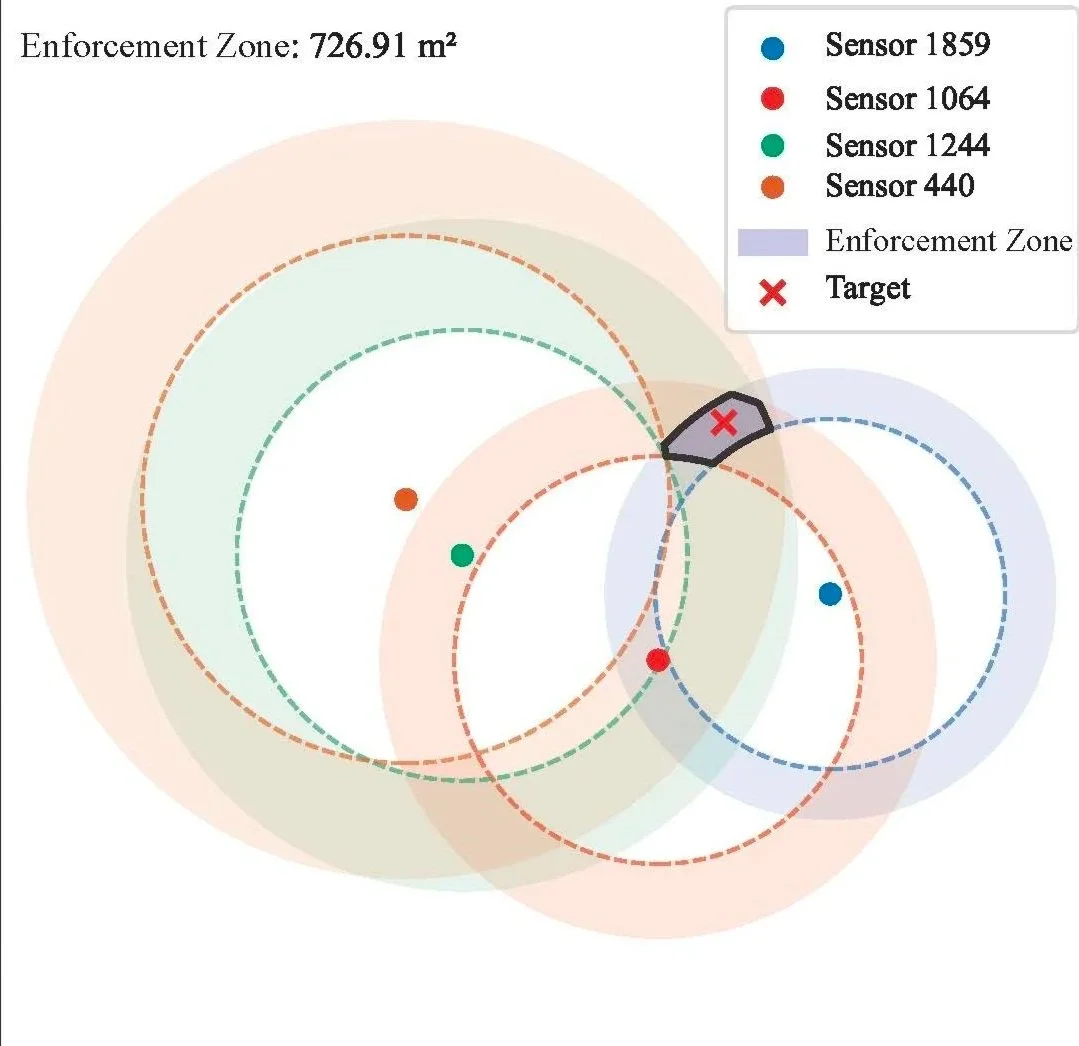
Target localization begins when validators gather sensor evidence, including signal class, sensor coordinates, and received SNR. Using the urban Hata propagation model, these measurements are converted into distance bounds, forming annular regions around sensors. The intersection of these regions defines the Enforcement Zone as a feasible polygon for the unknown target location. To improve accuracy, the framework also accounts for sources of uncertainty, such as noise and shadowing, and mitigates the effects of poor sensor geometry that can cause GDOP.
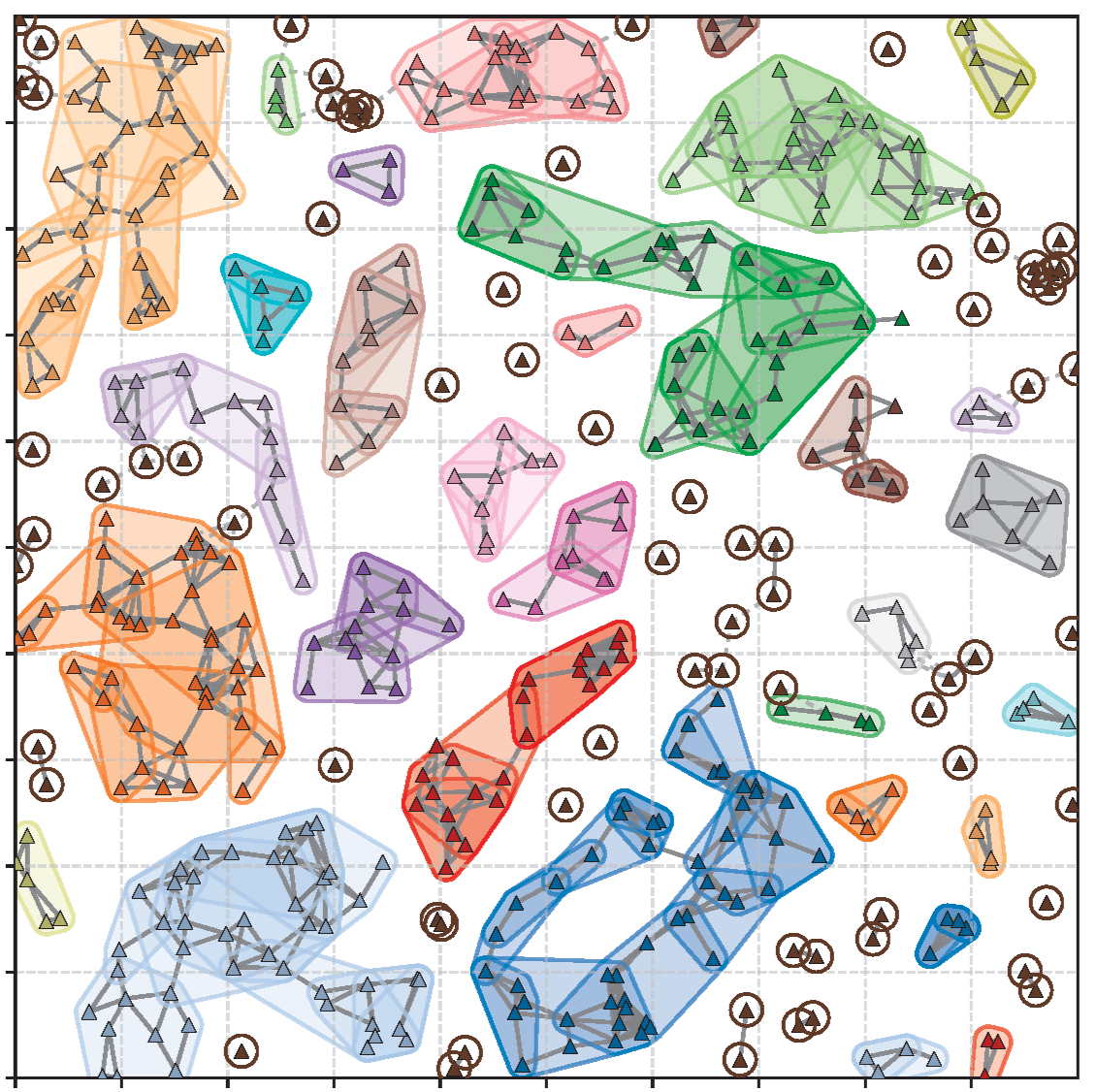
By aligning shard boundaries with wireless signal coverage, the system keeps all evidence for a target within one shard, avoiding cross-shard overhead and data fragmentation. Each regional shard is further divided into target-specific subshards, in which consensus is reached through a quality-aware DPoS mechanism that assigns higher voting weight to validators with smaller Enforcement Zones. Local decisions are then finalized through a hierarchical and shard leaders compete to append blocks using a dynamic PoW or ZoE-based, with difficulty adjusted by leader quality and sensing conditions. This design enables scalable, fast, and auditable recording of spectrum violations.